
If you’re looking for a First Aid course in Sydney, you’ve probably noticed there can be a considerable difference in price between training providers.
The qualification might be the same. The training experience isn’t.
- HLTAID011 Provide First Aid covers the skills and knowledge required to provide a first aid response to a casualty.
- HLTAID009 Provide Cardiopulmonary Resuscitation covers the skills and knowledge required to perform CPR, including the use of an automated external defibrillator (AED).
Training providers delivering these units must assess learners against the applicable requirements. But satisfying the requirements of a nationally recognised course doesn’t mean every training experience will feel the same.The trainer, class environment, facilities, booking experience, opportunities to practise and time available to ask questions can all affect what you take away from the day. That’s worth considering when comparing courses based purely on price.
1. Smaller First Aid classes can mean more individual attention
First Aid is a practical skill. You aren’t simply learning information. You’re learning what to do when somebody is injured, unconscious or experiencing a medical emergency.
A smaller, well-managed class gives the trainer more opportunity to observe participants, answer questions and help people who aren’t quite confident with a technique. It can also make it easier to participate. Instead of feeling like you’re one person in a crowded room trying to get through an assessment, the course can become a genuine learning experience.
When you’re choosing a First Aid course, it can therefore be worth asking: How many people are likely to be in the class?
The cheapest seat isn’t necessarily the best value if the learning environment doesn’t suit you.
2. A great First Aid trainer makes a difference
Most of us have attended training where we’ve watched the clock from the moment the course started.
First Aid shouldn’t be like that. An engaging trainer can take the required content and turn it into something practical, interesting and easier to remember. They can explain why you’re doing something, relate it to realistic situations, demonstrate techniques clearly and encourage people to get involved. That matters because First Aid isn’t knowledge you’re learning simply to pass an assessment. You may need to recall it months later when something has gone seriously wrong. Imagine someone collapsing at work, at your child’s sporting event or at a family barbecue. You’re not going to have your course notes sitting beside you.
You’re going to rely on what you remember. Good First Aid training should help build the confidence to act when it matters.
3. Practical learning should actually feel practical
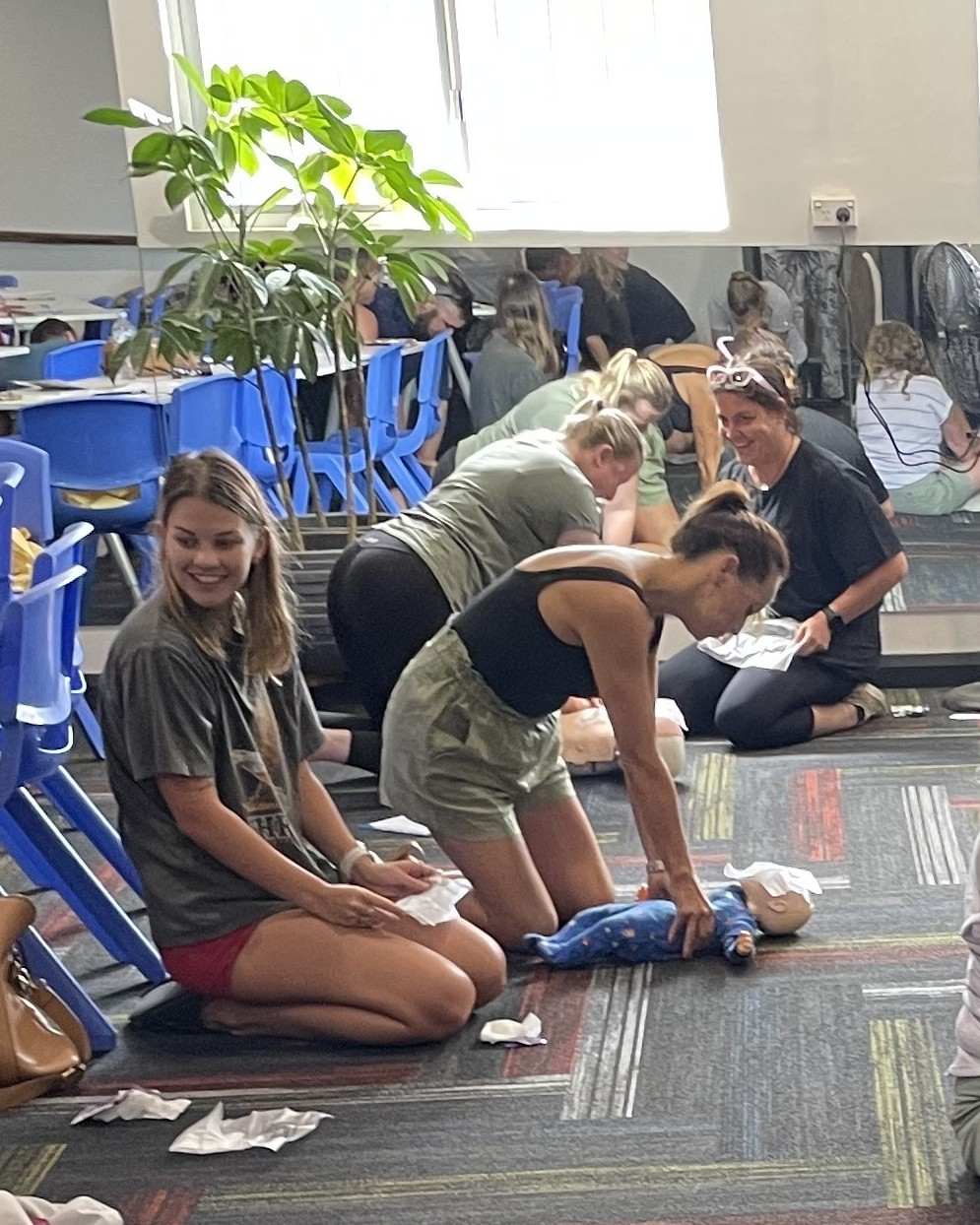
Reading about CPR and performing CPR are very different things. Quality face-to-face training gives you the opportunity to practise the physical skills involved, become familiar with the equipment and ask questions while an experienced trainer is there to help.
The same principle applies throughout First Aid. A course should help you connect the theory with what you might actually encounter outside the training room. You aren’t just trying to remember an answer for an assessment. You’re developing skills that may one day need to be used under pressure.
4. The learning environment matters
The room you’re training in might seem like a minor consideration until you’re spending several hours there.
A professional training environment should make it easier to concentrate, participate in practical activities and learn comfortably.
When comparing First Aid courses in Sydney, look beyond the course price and consider the overall training environment.
Is the facility designed for training? Is there enough room for practical activities? Can you clearly see demonstrations and interact with the trainer? Can you hear the instructor clearly or is there noise that interferes? Is the location convenient?
A better learning environment doesn’t automatically make someone a better First Aider, but it can contribute to a much better training experience.
5. Flexible booking can be worth paying for
Price isn’t the only cost involved in attending training. Your time has value too. A slightly cheaper course may not feel quite so cheap if the available dates don’t suit you, the location is inconvenient or changing your booking becomes unnecessarily difficult.
A provider offering regular course dates and sensible booking options can make maintaining your First Aid and CPR training much easier.
This becomes particularly important when you’re juggling work commitments, family responsibilities or an expiring qualification.
Convenience has value.
6. You’re buying confidence, not just a certificate
This is probably the biggest difference. There’s a difference between:
“I’ve got my First Aid certificate.” and “If something happens, I feel confident that I know what to do.”
The goal of good First Aid training isn’t simply to get you through the course. It should help you leave understanding what you’ve learned and feeling more capable of responding to an emergency. You may never need to use those skills. We hope you don’t.
But if there comes a day when someone needs your help, that’s probably when the difference between getting a certificate and actually learning First Aid will matter most.
So, is a more expensive First Aid course worth it?
Not automatically.
A higher price doesn’t guarantee better training, just as a low price doesn’t necessarily mean poor training.
Instead of choosing on price alone, compare what you’re receiving.
Before booking a First Aid or CPR course, consider:
- Class size and how much access you’ll have to the trainer
- Trainer quality and whether the course is engaging and practical
- Opportunities to practise the skills you’re learning
- Training facilities and the overall learning environment
- Course dates and booking flexibility
- Location and convenience
- Most importantly, whether the course is designed to help you retain the skills and have confidence to use them
Then compare the price.
First Aid and CPR Courses in Caringbah, Sydney
At Excite Safety, we believe First Aid training should be more than an exercise in getting another certificate. Our aim is to create practical, engaging training where participants understand what they’re doing, have the opportunity to practise their skills and leave feeling more confident about responding to a real emergency.
We deliver nationally recognised First Aid and CPR training in Caringbah in Sydney’s Sutherland Shire, including:
HLTAID011 Provide First Aid
and
HLTAID009 Provide Cardiopulmonary Resuscitation
So if you’re comparing First Aid courses and wondering why one provider may cost a little more than another, don’t just compare the qualification printed on the certificate. Compare the experience that gets you there. Because when someone actually needs First Aid, nobody is going to ask how much your course cost.
They’re going to need you to remember what to do.
Excite Safety Delivers Training and assessment delivered on behalf of Allens Training Pty Ltd RTO 90909